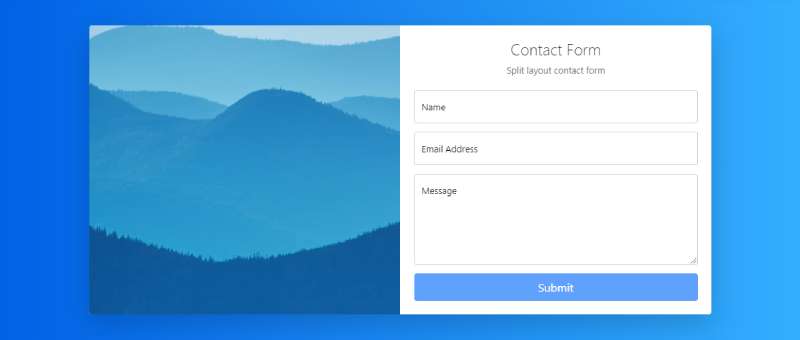
Cards changed how developers build content layouts. Gone are the days of hacking together panels and thumbnails.
These Bootstrap cards examples show you exactly how to create product displays, pricing tables, user profiles, and blog layouts that actually look good.
The card component handles responsive behavior out of the box. It works with the Bootstrap framework’s flexbox system, so alignment and sizing stay consistent across devices.
You’ll learn the markup structure, styling options, layout techniques, and real-world use cases.
Each example includes copy-paste code snippets you can drop into your projects today.
What is a Bootstrap Card
A Bootstrap card is a flexible content container built with HTML and CSS.
It replaces the older panel, well, and thumbnail components from Bootstrap 3.
Cards use flexbox layout for alignment and sizing, which makes them stack and stretch predictably across screen sizes.
The card component ships with minimal default styling. You add utility classes to control background colors, borders, spacing, and shadows.
Most frontend developers use cards for product displays, blog posts, user profiles, and pricing tables.
Bootstrap Cards Examples
Bootstrap Card Grid

Bootstrap Delivery Card With UX Animations

Bootstrap Cards Tutorial

Team Design Card Flipper Bootstrap 4

Endless Scrolling Cards

Bootstrap cards by Paolo Ocampo

Pokemon Card Holo Effect

Team Cards

Profile Bootstrap Card Design

Bootstrap Cards Image Gallery

Bootstrap card tile layout by Matt Ruddick

Parallax Bootstrap Card Template

Gradients Dashboard Cards

Responsive Blog Card Slider

Clash of Clans Cards

Responsive cards by Julia

Dribbble Member Card Concept

Bootstrap 5 Ecommerce Cards

Player/User Cards

Bootstrap Cards (Hurricanes)

Bootstrap cards by Nihar Bheemanathi

Bootstrap 5 Our Services Section with Icons

How Does a Bootstrap Card Work
Cards rely on the .card class as the outer wrapper.
Inside that wrapper, you nest structural elements like .card-body, .card-header, and .card-footer.
The framework handles padding, border-radius, and overflow automatically through its component library.
Cards expand to fill their parent container by default. Control width using grid system columns or custom CSS.
What Are the Main Parts of a Bootstrap Card
Every card component breaks down into specific structural pieces:
- card-body – main content area with default padding
- card-header – top section for titles or tabs
- card-footer – bottom section for actions or metadata
- card-img-top / card-img-bottom – image placement classes
- card-title – heading element styling
- card-text – paragraph styling within the body
Mix these classes based on your layout needs. Not every card requires all parts.
How is a Bootstrap Card Different from Other Bootstrap Components
Unlike modals or navigation bars, cards have no built-in JavaScript behavior.
They function as pure CSS containers.
Compare this to carousels or dropdowns that require JS initialization.
Cards also differ from table components because they display content in a block format rather than rows and columns.
Types of Bootstrap Cards
Bootstrap supports multiple card variations through different class combinations and markup structures.
What is a Basic Bootstrap Card
The simplest card needs just two elements: the .card wrapper and a .card-body inside.
“ <div class="card"> <div class="card-body"> Basic card content here </div> </div> `
Add .card-title and .card-text classes to structure the body content further.
What is an Image Card in Bootstrap
Image cards place graphics at the top, bottom, or as a full background overlay.
Use .card-img-top for images above the body content. Swap to .card-img-bottom for images below.
` <div class="card"> <img src="image.jpg" class="card-img-top" alt="Description"> <div class="card-body"> <h5 class="card-title">Card Title</h5> <p class="card-text">Supporting text below.</p> </div> </div> `
How Do You Position Images Inside Bootstrap Cards
Three main positioning options exist: top placement with .card-img-top, bottom placement with .card-img-bottom, and overlay mode with .card-img-overlay.
For overlays, stack the image and body content inside the same card, then apply .card-img-overlay to the body div.
What is a Bootstrap Card with Header and Footer
Headers and footers wrap above and below the main card body.
` <div class="card"> <div class="card-header">Featured</div> <div class="card-body"> <h5 class="card-title">Special Offer</h5> </div> <div class="card-footer text-muted">2 days ago</div> </div> `
Headers work well for category labels. Footers suit timestamps, author info, or action buttons.
What is a List Group Card in Bootstrap
List group cards display items in a vertical stack with borders between each entry.
Combine .list-group and .list-group-flush inside the card to remove outer borders and rounded corners.
` <div class="card"> <ul class="list-group list-group-flush"> <li class="list-group-item">Item one</li> <li class="list-group-item">Item two</li> <li class="list-group-item">Item three</li> </ul> </div> `
What is a Card with Navigation in Bootstrap
Cards accept tab components or pill navigation inside the header area.
Add .nav-tabs or .nav-pills with .card-header-tabs or .card-header-pills for proper alignment.
` <div class="card"> <div class="card-header"> <ul class="nav nav-tabs card-header-tabs"> <li class="nav-item"> <a class="nav-link active" href="#">Active</a> </li> <li class="nav-item"> <a class="nav-link" href="#">Link</a> </li> </ul> </div> <div class="card-body"> <p class="card-text">Tab content goes here.</p> </div> </div> `
This pattern works for settings panels, multi-step forms, or content that needs category switching.
Bootstrap Card Layout Options
Bootstrap provides multiple ways to arrange cards in groups, grids, and masonry-style columns.
How Do You Create Card Groups in Bootstrap
Wrap cards in a .card-group container to attach them side by side with equal height and no spacing between them.
` <div class="card-group"> <div class="card">...</div> <div class="card">...</div> <div class="card">...</div> </div> `
Headers and footers align automatically across all grouped cards.
How Do You Create a Card Deck in Bootstrap
Card decks add gutters between cards while maintaining equal heights.
Use .card-deck in Bootstrap 4. In Bootstrap 5, use row and column utilities instead since card-deck was removed.
` <div class="row row-cols-1 row-cols-md-3 g-4"> <div class="col"> <div class="card h-100">...</div> </div> </div> `
How Do You Create Card Columns (Masonry) in Bootstrap
The masonry layout stacks cards vertically in multiple columns like Pinterest.
Bootstrap 5 requires the Masonry plugin or CSS columns. Bootstrap 4 used .card-columns which is now deprecated.
` <div class="row" data-masonry='{"percentPosition": true}'> <div class="col-sm-6 col-lg-4 mb-4"> <div class="card">...</div> </div> </div> `
How Do You Make Responsive Card Grids
Combine Bootstrap’s grid classes with media queries for responsive card layouts.
Use .row-cols- utilities to control cards per row at each breakpoint.
` <div class="row row-cols-1 row-cols-sm-2 row-cols-lg-4 g-4"> <div class="col"><div class="card">...</div></div> <div class="col"><div class="card">...</div></div> </div> `
This approach follows mobile-first design principles.
Bootstrap Card Styling Options
Cards accept background utilities, border classes, and custom CSS for visual styling.
How Do You Add Background Colors to Bootstrap Cards
Apply contextual background classes directly to the card wrapper:
- .bg-primary
,.bg-secondary,.bg-success
- .bg-danger
,.bg-warning,.bg-info
- .bg-light
,.bg-dark
Add .text-white or .text-dark for proper text contrast.
How Do You Add Border Colors to Bootstrap Cards
Border utility classes override the default card border:
` <div class="card border-primary">...</div> <div class="card border-success">...</div> <div class="card border-danger">...</div> `
Combine with .border-2 or .border-3 for thicker borders in Bootstrap 5.
How Do You Create a Card with Shadow in Bootstrap
Bootstrap includes shadow utility classes for depth effects:
- .shadow-sm
- subtle shadow
- .shadow
- regular shadow
- .shadow-lg
- larger shadow
Custom shadows work through inline styles or a CSS box shadow generator.
How Do You Customize Card Width and Height
Cards fill their container width by default. Set explicit widths with style=”width: 18rem;” or utility classes like .w-50.
For equal height cards in a row, add .h-100 to each card element.
Bootstrap Card Content Types
Cards hold various content types including links, buttons, images, and form elements.
How Do You Add Links Inside a Bootstrap Card
Use .card-link for styled inline links within the card body:
` <a href="#" class="card-link">Read more</a> <a href="#" class="card-link">Share</a> `
Stretched links make the entire card clickable with .stretched-link on any anchor inside.
How Do You Add Buttons to a Bootstrap Card
Place button elements inside .card-body or .card-footer:
` <div class="card-body"> <a href="#" class="btn btn-primary">Go somewhere</a> </div> `
Button groups and hover effects work normally inside cards.
How Do You Add Multiple Images to a Bootstrap Card
Stack multiple images using separate img tags or create a gallery layout inside the card body.
For image grids within cards, nest a row/column structure inside .card-body.
How Do You Add Forms Inside Bootstrap Cards
Cards work as containers for login forms, contact forms, and search interfaces.
` <div class="card"> <div class="card-body"> <form> <div class="mb-3"> <input type="email" class="form-control"> </div> <button class="btn btn-primary">Submit</button> </form> </div> </div> `
Common Bootstrap Card Use Cases
Real-world applications for Bootstrap cards span e-commerce, portfolios, blogs, and SaaS platforms.
How Do You Create Product Cards with Bootstrap
Product card layouts combine images, titles, prices, and add-to-cart buttons.
` <div class="card"> <img src="product.jpg" class="card-img-top"> <div class="card-body"> <h5 class="card-title">Product Name</h5> <p class="card-text">$99.00</p> <a href="#" class="btn btn-primary">Add to Cart</a> </div> </div> `
How Do You Create Profile Cards with Bootstrap
User profile cards display avatars, names, job titles, and social links.
Center content with .text-center and use rounded images with .rounded-circle.
How Do You Create Pricing Cards with Bootstrap
Pricing tables use cards with headers for plan names, list groups for features, and footers for CTAs.
` <div class="card text-center"> <div class="card-header">Pro Plan</div> <div class="card-body"> <h2>$29/mo</h2> <ul class="list-unstyled"> <li>10 Users</li> <li>50GB Storage</li> </ul> </div> </div> `
How Do You Create Blog Post Cards with Bootstrap
Blog cards show featured images, titles, excerpts, author info, and publish dates.
Add metadata in the footer with muted text styling using .text-muted.
How Do You Create Testimonial Cards with Bootstrap
Testimonial layouts pair quote text with customer photos and company names.
Use .blockquote inside the card body for semantic quote markup.
Bootstrap Card Accessibility
Accessible cards require proper heading structure, alt text, and keyboard support.
How Do You Make Bootstrap Cards Accessible
Follow these web accessibility practices for card components:
- Add descriptive alt
text to all card images
- Use ARIA labels for interactive elements
- Maintain logical heading hierarchy (h2, h3, h4)
- Ensure sufficient color contrast ratios
- Make clickable cards keyboard navigable
Screen readers announce card content in DOM order, so structure markup logically.
Bootstrap Card Browser Support
Bootstrap cards work across all modern browsers with consistent rendering.
Which Browsers Support Bootstrap Cards
Full cross-browser support includes:
- Chrome (latest)
- Firefox (latest)
- Safari (latest)
- Edge (latest)
- Opera (latest)
Internet Explorer 11 requires Bootstrap 4. Bootstrap 5 dropped IE support entirely.
Cards rely on flexbox, which has 99%+ global browser support according to Can I Use data.
FAQ on Bootstrap Cards Examples
What is a Bootstrap card used for?
A Bootstrap card is a flexible content container for displaying images, text, links, and buttons in a structured layout. Developers use cards for product listings, blog posts, user profiles, pricing tables, and testimonials across websites and progressive web apps.
How do I make Bootstrap cards the same height?
Add the .h-100 utility class to each card element. When cards sit inside a row with column wrappers, this class stretches all cards to match the tallest one. Works automatically with card groups too.
Can I use Bootstrap cards without JavaScript?
Yes. Cards are pure CSS components with no JS dependencies. Unlike accordions or tooltips, cards render using only HTML markup and Bootstrap’s stylesheet. No initialization required.
How do I make Bootstrap cards responsive?
Use Bootstrap’s grid system with .row-cols- classes. Set different column counts per breakpoint like .row-cols-1 .row-cols-md-2 .row-cols-lg-4. Cards automatically stack on mobile and expand on larger screens.
How do I add a shadow to a Bootstrap card?
Apply shadow utility classes directly to the card div. Use .shadow-sm for subtle depth, .shadow for standard elevation, or .shadow-lg for prominent shadows. Custom shadows need inline styles or separate CSS rules.
What is the difference between card-group and card-deck?
Card groups attach cards together without gaps. Card decks add gutters between cards. Bootstrap 5 removed .card-deck entirely. Use .row with .g-4 spacing utilities to recreate deck behavior in newer versions.
How do I make a clickable Bootstrap card?
Add the .stretched-link class to any anchor inside the card body. This extends the link's clickable area to cover the entire card. The parent card needs position: relative which Bootstrap applies by default.
Can I put a form inside a Bootstrap card?
Yes. Cards work as containers for any content including accessible form elements, input fields, checkboxes, and submit buttons. Place form markup inside .card-body for proper padding and alignment.
How do I change Bootstrap card border color?
Use border utility classes like .border-primary, .border-success, or .border-danger. Combine with .border-2 for thicker lines. Remove borders entirely with .border-0. Custom colors require overriding Bootstrap CSS.
Do Bootstrap cards work in all browsers?
Cards render correctly in Chrome, Firefox, Safari, Edge, and Opera. Bootstrap 5 dropped Internet Explorer support. Cards rely on flexbox layout which has over 99% global browser coverage according to Can I Use statistics.
Conclusion
These Bootstrap cards examples give you the building blocks for any content layout project.
You now know how to structure card markup, apply background and border utilities, create responsive grids, and build real-world components like testimonials and pricing tables.
Cards integrate smoothly with other Bootstrap UI elements. Combine them with headers, footers, and sidebars to build complete page layouts.
Add card hover effects for better user interface feedback.
The card component keeps evolving with each Bootstrap version. Check the official documentation on GitHub for the latest utility classes and accessibility improvements.
Start with the basic examples, then customize them to match your design system.

Many of his resources are available on various design marketplaces. Over the years, he's worked with a range of clients and contributed to design publications like Designmodo, WebDesignerDepot, and Speckyboy, Slider Revolution among others.
- What is Backend in Web Development? - September 13, 2026
- What is Frontend Development? - September 11, 2026
- How to Make a Button in Figma: Design Best Practices - September 10, 2026