
Customer reviews sell. Static testimonials get ignored.
A Bootstrap testimonial slider transforms client feedback into an interactive carousel that visitors actually read and trust.
This responsive component rotates through customer quotes, star ratings, and author photos with smooth slide transitions.
Built on Bootstrap’s carousel framework, it works across all devices without extra coding for touch gestures or mobile layouts.
This guide covers everything you need to build testimonial sliders from scratch: HTML structure, CSS styling, JavaScript controls, customization options, and troubleshooting common issues.
You will also learn best practices for design, accessibility, and when to consider alternative slider libraries like Swiper.js or Slick Slider.
What is a Bootstrap Testimonial Slider
A Bootstrap testimonial slider is a responsive web component that displays customer reviews, feedback, and quotes in a rotating carousel format.
It combines the Bootstrap carousel component with testimonial cards to create an interactive social proof section.
The slider automatically cycles through multiple client testimonials, showing one or more reviews at a time with smooth slide transitions.
Most testimonial sliders include navigation arrows, pagination indicators, author photos, and star ratings.
This component works across all screen sizes thanks to Bootstrap’s responsive design framework and built-in touch swipe support for mobile devices.
Bootstrap Testimonial Slider Examples
Bootstrap 4 Testimonial Slider Example By Clicking On The Client Photos
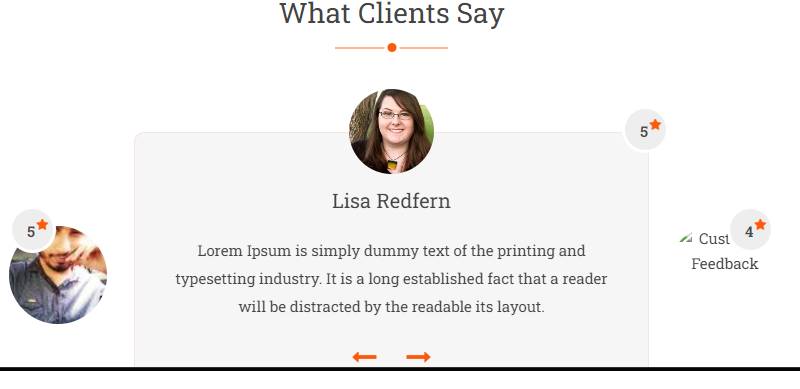
Bootstrap Testimonial Slider W3schools

Carousel V04
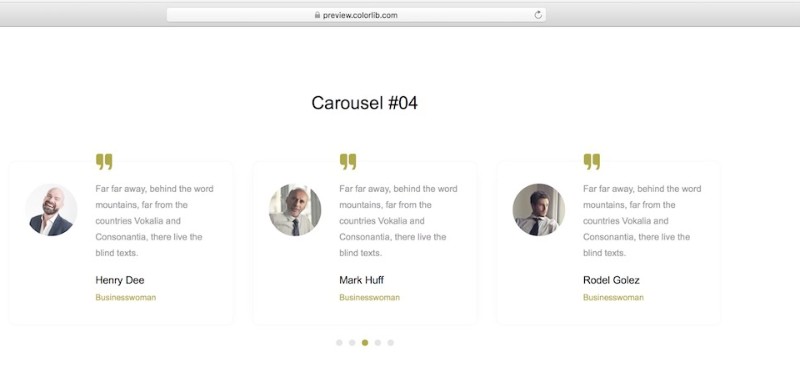
Bootstrap 4 Testimonials or People Review Slider

Bootstrap 4 Simple Testimonial Carousel Slider

Testimonial Slider Jquery Example
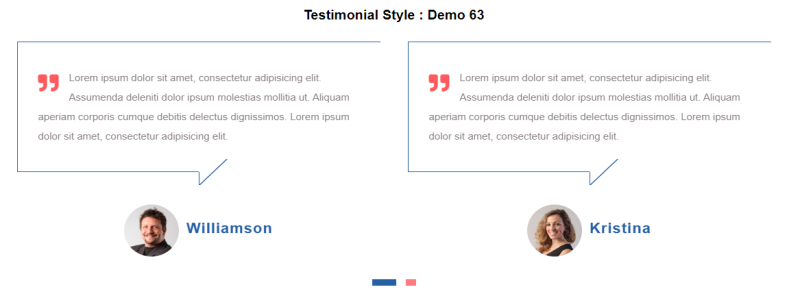
Owl Carousel 2 Testimonial

Carousel V08
Bootstrap 4 Testimonial Slider Example With Beautiful UI

Beautiful Bootstrap Testimonial Slider Example

Testimonials Slider for Computer Doctor

Simple Slick Testimonial Slider
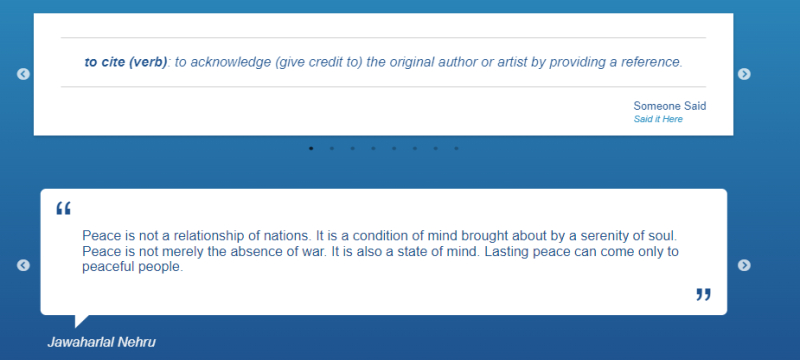
Carousel V13

Employee Testimonial Examples
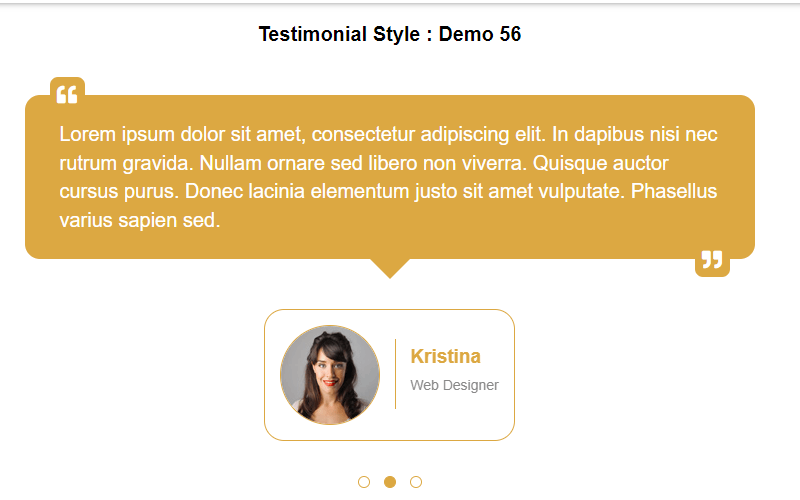
Bootstrap Carousel Testimonial Slider Example

Client Testimonial Bootstrap 4 Slider Example

Testimonials Examples For Students
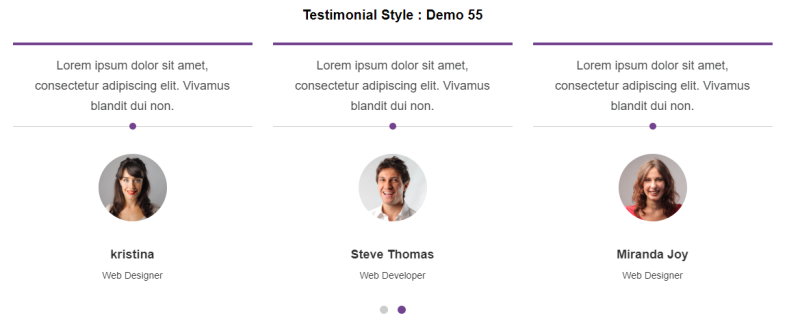
Testimonial Slider Pure CSS

How Does a Bootstrap Testimonial Slider Work
The testimonial slider relies on Bootstrap’s carousel component as its foundation.
JavaScript handles the auto-sliding functionality, touch gestures, and navigation controls.
Data attributes like data-bs-ride="carousel" and data-bs-interval control the automatic rotation and timing between slides.
Each testimonial sits inside a carousel-item div, and CSS manages the slide transition effects.
The carousel inner container holds all slides while the outer wrapper maintains the component structure.
Touch enabled slider functionality comes built into Bootstrap 5, so mobile users can swipe between customer reviews without extra code.
What Are the Components of a Bootstrap Testimonial Slider
A complete testimonial carousel consists of several interconnected parts working together.
Understanding each component helps you build and customize sliders that match your design needs.
What HTML Structure Does a Bootstrap Testimonial Slider Use
The HTML structure includes a main carousel wrapper, carousel-inner container, individual carousel-item divs, and testimonial cards.
Navigation controls and carousel indicators sit outside the carousel-inner but inside the main wrapper.
What CSS Classes Style a Bootstrap Testimonial Slider
Core classes include .carousel, .carousel-inner, .carousel-item, and .active for the visible slide.
Add .carousel-fade for fade transitions instead of the default sliding animation.
What JavaScript Functions Control a Bootstrap Testimonial Slider
Bootstrap 5 uses vanilla JavaScript (no jQuery dependency) with methods like .carousel('next'), .carousel('prev'), and .carousel('pause').
The carousel JavaScript API also fires events like slide.bs.carousel and slid.bs.carousel for custom interactions.
What Are the Types of Bootstrap Testimonial Sliders
Different testimonial slider layouts serve different design requirements.
Single-slide carousels display one testimonial at a time, perfect for detailed customer stories with longer quotes.
Multi-item sliders show several reviews simultaneously in a scrolling container, good for brief quotes or star ratings.
Card-based testimonials use Bootstrap’s card component for structured layouts with author photos, names, and company info.
Fade transition sliders swap testimonials with opacity changes rather than horizontal sliding, giving a cleaner look.
D effect carousels add depth through CSS transforms and perspective properties for a more dramatic presentation.
How to Create a Bootstrap Testimonial Slider
Building a testimonial slider from scratch takes about 15 minutes once you understand the structure.
The process involves adding Bootstrap files, creating the HTML markup, and customizing the appearance.
How to Add Bootstrap CDN Links for Testimonial Sliders
Include the Bootstrap 5 CSS in your document head and the JavaScript bundle before the closing body tag.
CDN links from jsdelivr or cdnjs load faster than self-hosted files for most users.
How to Structure Testimonial Cards in Bootstrap
Each testimonial card needs a blockquote element for the review text, an image tag for the author photo, and paragraph tags for the name and title.
Wrap everything in a carousel-item div with the first slide getting an additional active class.
How to Add Navigation Controls to Bootstrap Testimonial Sliders
Add buttons with carousel-control-prev and carousel-control-next classes, linking them to your carousel ID with data-bs-target.
Pagination dots use an ordered list with the carousel-indicators class.
How to Customize Slide Timing in Bootstrap Testimonial Sliders
Set data-bs-interval="5000" on the carousel element for 5-second intervals between slides.
Use data-bs-interval="false" to disable auto-sliding entirely, letting users control navigation manually.
What Are the Customization Options for Bootstrap Testimonial Sliders
Bootstrap’s carousel component offers several data attributes for controlling slider behavior without writing custom code.
Key customization options:
data-bs-interval– milliseconds between slide transitions (default: 5000)data-bs-ride– set to “carousel” for autoplay on page loaddata-bs-pause– pause on hover when set to “hover”data-bs-wrap– continuous loop when set to “true”data-bs-touch– enable or disable touch swipe gesturesdata-bs-keyboard– keyboard navigation with arrow keys
The .carousel-fade class switches from sliding to fade effect transitions.
Custom CSS animations can replace the default slide behavior for unique testimonial presentations.
How to Make a Bootstrap Testimonial Slider Responsive
Bootstrap’s grid system handles most responsive layout needs automatically.
Use media queries to adjust testimonial card dimensions, font sizes, and spacing at different breakpoints.
The viewport meta tag must be present for proper scaling on mobile devices.
Responsive considerations:
- Show fewer testimonials per slide on smaller screens
- Increase touch target size for navigation buttons on mobile
- Use responsive utility classes like
.d-noneand.d-md-blockto hide elements - Test touch swipe functionality across iOS and Android devices
A mobile-first design approach works best since Bootstrap 5 is built on this principle.
What Are Common Issues with Bootstrap Testimonial Sliders
Most testimonial slider problems come from missing JavaScript files, incorrect class names, or CSS conflicts.
Diagnosing issues quickly requires checking browser developer tools for console errors.
How to Fix a Bootstrap Testimonial Slider That Does Not Slide
Verify the Bootstrap JavaScript bundle loads after the carousel HTML, check that data-bs-ride="carousel" is present on the wrapper element.
Multiple slides need the .carousel-item class with exactly one having the .active class.
How to Fix Bootstrap Testimonial Slider Navigation Issues
Ensure data-bs-target matches your carousel’s ID exactly (including the hash symbol), confirm data-bs-slide is set to “prev” or “next” on control buttons.
Pagination indicators need data-bs-slide-to attributes with zero-based index numbers.
What Are the Best Practices for Bootstrap Testimonial Sliders
Effective testimonial sliders balance visual appeal with usability and performance.
Design best practices:
- Keep testimonial text under 150 words for quick reading
- Use real customer photos instead of stock images
- Include the reviewer’s full name, title, and company
- Add star ratings for quick visual trust signals
- Compress images to maintain fast page load times
Follow web accessibility guidelines by adding ARIA labels to carousel controls.
Set a reasonable auto-slide interval (5-7 seconds minimum) so users can read each testimonial completely.
Place testimonial sliders above the fold on landing pages near your call-to-action buttons for maximum conversion impact.
How to Add Star Ratings to Bootstrap Testimonial Sliders
Star ratings add instant credibility to customer testimonials.
Use Bootstrap icons or Font Awesome to display filled and empty star glyphs.
Basic star rating markup:
- Create a container div for the rating display
- Add SVG star icons or icon font classes for each star
- Use CSS color properties to differentiate filled vs empty stars
- Position the rating near the reviewer’s name for clear association
Dynamic ratings can be generated with Ajax calls to pull real review scores from your database or third-party review platforms.
What Are Alternatives to Bootstrap Testimonial Sliders
Several standalone libraries offer more features than Bootstrap’s native carousel component.
Popular alternatives:
- Slick Slider – jQuery-based with extensive customization options, lazy loading, and variable width slides
- Swiper.js – modern JavaScript slider with no jQuery dependency, 3D effects, and parallax support
- Owl Carousel 2 – lightweight jQuery plugin with touch drag, autoplay, and responsive breakpoints
- Splide – accessible, lightweight slider written in TypeScript with no dependencies
Pure CSS carousels work for simple testimonial displays without JavaScript overhead.
JavaScript carousels built from scratch give complete control but require more development time.
Choose based on your project’s existing dependencies, performance requirements, and customization needs.
FAQ on Bootstrap Testimonial Slider
What is a Bootstrap testimonial slider?
A Bootstrap testimonial slider is a responsive carousel component that displays customer reviews in a rotating format. It uses Bootstrap’s carousel framework with testimonial cards, navigation arrows, and pagination indicators to showcase client feedback dynamically.
How do I create a testimonial slider in Bootstrap 5?
Add the Bootstrap 5 CDN links to your page. Create a div with the .carousel class, add .carousel-inner containing multiple .carousel-item divs with testimonial content. Include navigation controls and set data-bs-ride="carousel" for autoplay.
Why is my Bootstrap testimonial slider not sliding automatically?
Check that the Bootstrap JavaScript bundle loads correctly. Verify data-bs-ride="carousel" exists on the wrapper element. Ensure exactly one carousel-item has the .active class. Console errors in browser developer tools reveal missing dependencies.
How do I change the slide interval on a Bootstrap carousel?
Add data-bs-interval="5000" to the carousel element for 5-second intervals. The value is in milliseconds. Set data-bs-interval="false" to disable auto-sliding completely and let users control navigation manually.
Can I show multiple testimonials per slide in Bootstrap?
Yes. Place multiple testimonial cards inside each .carousel-item div using Bootstrap’s form row and column classes. Use .col-md-4 for three testimonials per slide on medium screens and larger viewports.
How do I add fade transitions instead of sliding?
Add the .carousel-fade class to your main carousel div alongside the .carousel class. This replaces the default horizontal slide animation with opacity-based fade transitions between testimonials for a cleaner visual effect.
Is Bootstrap testimonial slider mobile responsive?
Yes. Bootstrap 5 carousels are mobile-first by design. Touch swipe gestures work automatically on iOS and Android devices. Use responsive utility classes and Bootstrap components to adjust layouts at different screen breakpoints.
How do I add star ratings to testimonial cards?
Use Font Awesome icons or Bootstrap Icons to display star glyphs. Create filled stars with one color class and empty stars with another. Position the rating container near the reviewer name inside each carousel-item testimonial card.
What are alternatives to Bootstrap carousel for testimonials?
Swiper.js offers modern features without jQuery dependency. Slick Slider provides extensive customization options. Owl Carousel 2 is lightweight with touch support. Splide delivers accessibility-focused functionality. Pure CSS slideshows work for simple implementations.
How do I make Bootstrap testimonial sliders accessible?
Add ARIA labels to carousel controls and live region attributes. Include accessible typography with sufficient color contrast. Ensure keyboard navigation works properly. Provide pause functionality for users who need more time to read testimonials.
Conclusion
A Bootstrap testimonial slider turns static client feedback into an engaging social proof section that builds trust with visitors.
The carousel component handles responsive breakpoints, touch swipe gestures, and auto-sliding functionality out of the box.
You now know how to structure testimonial cards, configure navigation controls, add pagination indicators, and troubleshoot common issues.
Customize slide intervals, fade transitions, and CSS card hover effects to match your brand.
Follow accessibility guidelines with proper ARIA labels and responsive typography for all users.
Whether you stick with Bootstrap 5’s native carousel or switch to Owl Carousel for advanced features, testimonial sliders remain one of the most effective interactive elements for conversion-focused pages.
Start building your testimonial carousel today.

Many of his resources are available on various design marketplaces. Over the years, he's worked with a range of clients and contributed to design publications like Designmodo, WebDesignerDepot, and Speckyboy, Slider Revolution among others.
- What is Backend in Web Development? - September 13, 2026
- What is Frontend Development? - September 11, 2026
- How to Make a Button in Figma: Design Best Practices - September 10, 2026