Modern websites need to tell stories that captivate users from the first scroll. Bootstrap timeline examples transform boring chronological data into engaging visual narratives that keep visitors hooked.
No need to start from scratch or fight with CSS positioning for hours.
This guide covers vertical, horizontal, centered, and card-based timeline layouts with complete code snippets.
You’ll learn the HTML structure, responsive techniques, customization options, and accessibility requirements for each timeline type.
Copy the examples. Modify the styles. Ship faster.
What is a Bootstrap Timeline
A Bootstrap timeline is a UI component that displays events in chronological order using the Bootstrap CSS framework.
Developers use it for project milestones, company history pages, order tracking systems, and activity feeds.
The component relies on Bootstrap’s grid system and flexbox utilities to create responsive layouts that work across all screen sizes.
Unlike static lists, timelines add visual context through connector lines, date markers, and event cards.
Bootstrap timeline examples
Horizontal Web Timeline Design Style Example by CaptainJack

Bootstrap Timeline Steps

Horizontal & Vertical Bootstrap Timeline by Rich

Vertical Bootstrap Timeline in Half Page

Horizontal Bootstrap Timeline by Clint Brown

Horizontal Timeline Inspired by Adam Kimmerer

Responsive Timeline by Clay

Bootstrap Vertical Timeline with Image Cards and Descriptions

Timeline with the Accordion Collapse

Sortable Timeline

Simple Timeline

Bootstrap 4 User Business Timeline With Time

Timeline with Animation

Bootstrap Timeline with JS Editor – IN PROGRESS

Super Simple Bootstrap Responsive Timeline

Multi-Position Bootstrap Timelines

Tracking Result Timeline

Colorful Icons for Bootstrap Timeline Joints

Bootstrap Timeline by Betul

Horizontal Timeline Responsive Design
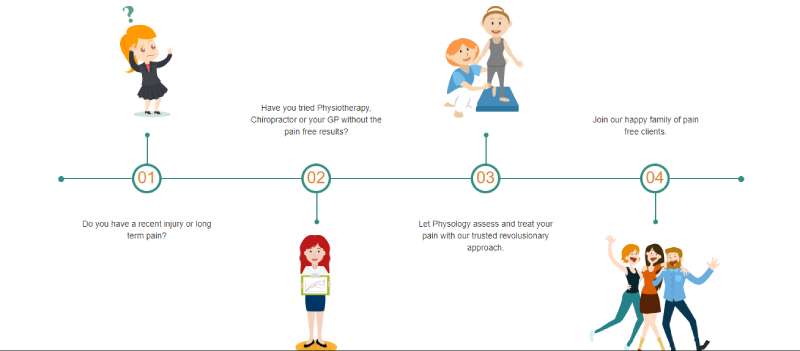
Bootstrap Timeline with Colorful Lines and Icons

Bootstrap 4 Experience Timeline

Responsive Timeline by Bruno Rodrigues

What Are the Main Types of Bootstrap Timelines
Bootstrap timelines come in several layout variations, each suited to different content types and design requirements.
Vertical Timeline
Events stack top to bottom with a single connector line running through the left or right side.
Best for mobile devices and long event sequences like changelog displays or user journey tracking.
Horizontal Timeline
Events flow left to right, ideal for process visualization and step indicators with limited milestones.
Requires horizontal scroll on smaller viewports or careful responsive design handling.
Centered Timeline
The connector line runs down the center with events alternating left and right.
Creates balanced visual hierarchy for desktop layouts, commonly used for company history displays.
Alternating Timeline
Similar to centered but with more dramatic left-right shifts between entries.
Works well for comparison-style content where contrasting events need separation.
Card-Based Timeline
Each event lives inside a Bootstrap card component with its own header, body, and footer sections.
Supports rich content including images, buttons, and nested components.
How to Create a Bootstrap Timeline
Building a timeline requires proper HTML structure, CSS styling, and responsive breakpoints.
What HTML Structure Does a Bootstrap Timeline Require
The basic structure uses nested div elements with Bootstrap’s row and column classes.
Each timeline entry needs a marker element, connector segment, and content container:
- Outer wrapper with
.timelineclass - Individual
.timeline-itemcontainers for each event - Marker elements using
.timeline-markerwith icon integration - Content blocks holding dates, titles, and descriptions
What CSS Classes Style a Bootstrap Timeline
Bootstrap provides utility classes for spacing, colors, and positioning.
Custom CSS handles the connector lines using ::before and ::after pseudo-elements.
The position: relative and position: absolute properties control marker placement along the timeline axis.
How to Make a Bootstrap Timeline Responsive
Use media queries to shift from centered layouts to single-column on mobile.
Bootstrap’s breakpoint classes like .d-none, .d-md-block toggle visibility at specific viewport widths.
Test connector line positioning across devices since absolute positioning can break on narrow screens.
Bootstrap Timeline Examples with Code
These working examples cover the most common timeline patterns with copy-ready code.
How to Build a Vertical Timeline in Bootstrap
Vertical timelines use a single column layout with the connector line positioned using CSS.
The structure wraps each event in .timeline-item with flexbox alignment:
“ <div class="timeline"> <div class="timeline-item"> <div class="timeline-marker"></div> <div class="timeline-content"> <h5>Event Title</h5> <p class="text-muted">January 2024</p> <p>Event description here.</p> </div> </div> </div> `
Add Bootstrap icons inside the marker div for visual distinction between event types.
How to Build a Horizontal Timeline in Bootstrap
Horizontal layouts require display: flex on the wrapper with overflow-x: auto for scroll behavior.
Each timeline item needs fixed or minimum width to prevent collapse:
` .timeline-horizontal { display: flex; overflow-x: auto; padding: 20px 0; } .timeline-horizontal .timeline-item { min-width: 200px; flex-shrink: 0; } `
The connector line runs horizontally using a border-top on the wrapper element.
How to Build a Centered Timeline in Bootstrap
Centered timelines alternate content left and right of a middle connector.
Use Bootstrap’s grid with .col-md-5 for content and .col-md-2 for the center marker column.
Odd and even selectors in CSS flip the order property to swap sides.
How to Build an Alternating Timeline in Bootstrap
The alternating pattern builds on centered layouts with enhanced spacing and visual separation.
Apply :nth-child(odd) and :nth-child(even) selectors to control positioning.
Consider adding subtle animations on scroll for each entry.
How to Build a Card-Based Timeline in Bootstrap
Wrap timeline content inside Bootstrap’s .card structure for richer formatting options.
The card component adds shadows, borders, and organized sections automatically:
` <div class="timeline-item"> <div class="timeline-marker"></div> <div class="card"> <div class="card-header">March 2024</div> <div class="card-body"> <h5 class="card-title">Milestone</h5> <p class="card-text">Details here.</p> </div> </div> </div> `
Bootstrap Timeline Components and Classes
Timelines combine multiple Bootstrap utilities and optional third-party integrations.
What Icons Work Best with Bootstrap Timelines
Bootstrap Icons, Font Awesome, and Feather Icons all integrate cleanly with timeline markers.
Use semantic icons matching event types: checkmarks for completed items, clocks for pending, alerts for warnings.
SVG icons scale without quality loss and support CSS color properties.
What Color Schemes Fit Bootstrap Timelines
Bootstrap’s contextual colors (.bg-primary, .bg-success, .bg-danger) indicate status at a glance.
Maintain proper color contrast between markers, connectors, and background for accessibility.
How to Add Animations to a Bootstrap Timeline
CSS transitions on opacity and transform create fade-in or slide effects as items enter the viewport.
Use CSS keyframes for more complex sequences or JavaScript libraries like AOS for scroll-triggered animations.
Keep animation duration under 400ms to avoid sluggish user experience.
Bootstrap Timeline Customization
Default Bootstrap styles rarely match your brand. Custom styling transforms generic timelines into polished components.
How to Change Timeline Connector Lines
Target the ::before pseudo-element on your timeline wrapper to modify line thickness, color, and style.
Use border-left for vertical layouts, border-top for horizontal; dashed or dotted borders add visual variety.
How to Style Timeline Markers
Markers use border-radius: 50% for circles or custom shapes via CSS clip-path.
Apply box shadows for depth, gradient backgrounds for modern aesthetics.
How to Adjust Timeline Spacing
Bootstrap’s spacing utilities (.mb-4, .py-3) control gaps between timeline items quickly.
Proper white space between entries improves readability and scan-ability on content-heavy timelines.
Bootstrap Timeline Use Cases
Different industries and applications benefit from specific timeline configurations.
When to Use a Timeline for Project Milestones
Software releases, construction phases, and campaign launches display well in vertical timeline formats.
Add progress bars within each milestone card to show completion percentage.
When to Use a Timeline for Company History
Centered alternating layouts work best for “About Us” pages, investor presentations, and annual reports.
Include founding dates, key hires, funding rounds, and product launches as separate entries.
When to Use a Timeline for Order Tracking
E-commerce shipping status, delivery tracking, and fulfillment workflows benefit from horizontal step indicators.
Color-coded markers (green for complete, yellow for pending, gray for upcoming) communicate status instantly.
When to Use a Timeline for User Activity Feeds
Social platforms, notification centers, and audit trails use vertical timelines with newest entries at top.
Integrate dropdown menus for actions like edit, delete, or share on each activity item.
Bootstrap Timeline Accessibility
Accessible timelines ensure all users can navigate and understand chronological content.
How to Make a Bootstrap Timeline Screen Reader Friendly
Use semantic HTML elements:
or for the timeline list,
for each event.AddWhat ARIA Labels Does a Timeline Need
Apply
Each marker icon needs
Reference the ARIA specification for complete landmark and role requirements.
Bootstrap Timeline Browser Support
Modern CSS features power timeline layouts, but older browsers need fallbacks.
Which Browsers Support Bootstrap Timelines
Chrome, Firefox, Safari, and Edge (Chromium) handle flexbox and grid layouts without issues.
Bootstrap 5 officially supports the last two major versions of each browser; Bootstrap 4 includes IE11 support with limitations.
How to Fix Timeline Display Issues in Older Browsers
Test cross-browser compatibility using BrowserStack or local virtual machines.
Provide flexbox fallbacks for IE11:
Use CSS tools with autoprefixer to generate vendor prefixes automatically during build.
FAQ on Bootstrap Timeline Examples
What is a Bootstrap timeline component?
A Bootstrap timeline is a UI element that displays events in chronological order using Bootstrap’s CSS framework.
It combines the grid system, flexbox utilities, and custom styling to create vertical or horizontal event sequences with connector lines and markers.
Does Bootstrap have a built-in timeline component?
No. Bootstrap doesn’t include a native timeline component in its core library.
Developers build timelines using Bootstrap’s existing utilities like cards, list groups, and grid classes combined with custom CSS for connector lines and markers.
How do I create a responsive timeline in Bootstrap?
Use Bootstrap’s breakpoint classes and mobile-first design approach.
Start with a single-column vertical layout for mobile, then use
Can I use Bootstrap 5 timelines without jQuery?
Yes. Bootstrap 5 removed jQuery as a dependency entirely.
Timeline components built with Bootstrap 5 use vanilla JavaScript for any interactive features like collapse, tooltips, or scroll-triggered animations.
What icons work best with Bootstrap timelines?
Font Awesome, Bootstrap Icons, Feather Icons, and Lucide all integrate well with timeline markers.
Use accessible SVG icons for better scaling and CSS color control on milestone markers and event indicators.
How do I add animations to a Bootstrap timeline?
Apply CSS transitions on opacity and transform properties for fade or slide effects.
Libraries like AOS (Animate On Scroll) trigger CSS animations when timeline items enter the viewport during scroll.
What is the difference between vertical and horizontal timelines?
Vertical timelines stack events top-to-bottom, ideal for mobile and long event lists.
Horizontal timelines flow left-to-right, better for desktop process visualization and step indicators with limited milestones.
How do I customize timeline connector line styles?
Target the
Modify
Are Bootstrap timelines accessible for screen readers?
They can be. Use semantic HTML with ordered or unordered lists for the timeline structure.
Add
Can I use Bootstrap timelines for order tracking?
Yes. E-commerce sites commonly use horizontal timeline layouts for shipping status and delivery tracking.
Color-coded markers indicate completed, pending, and upcoming steps. Pair with Ajax for real-time status updates.
Conclusion
These Bootstrap timeline examples give you production-ready code for any chronological display need.
Vertical layouts handle activity feeds and changelog displays. Horizontal designs work for status trackers and workflow diagrams.
Centered timelines add visual balance to release notes and task progression pages.
The code works with Bootstrap 5 and Bootstrap 4. Grab it via CDN or npm, drop it into your project, and customize the milestone markers, event cards, and animation effects to match your brand.
Don’t forget accessibility. Semantic HTML, proper date display elements, and ARIA labels make your timeline usable for everyone.
Pick a template. Tweak the utility classes. Launch something that looks custom without the custom development time.

Many of his resources are available on various design marketplaces. Over the years, he's worked with a range of clients and contributed to design publications like Designmodo, WebDesignerDepot, and Speckyboy, Slider Revolution among others.
- What is Backend in Web Development? - September 13, 2026
- What is Frontend Development? - September 11, 2026
- How to Make a Button in Figma: Design Best Practices - September 10, 2026