Users expect to find what they need fast. A well-built search box makes that happen.
Bootstrap search box examples give you ready-to-use code for adding search functionality to any website. No need to build form controls from scratch.
The Bootstrap framework handles styling, responsiveness, and browser compatibility out of the box.
This guide covers basic search inputs, navbar integration, autocomplete patterns, icon placement, and dropdown filters. You will also learn styling techniques, accessibility requirements, and how to connect your search box to actual functionality.
Each example includes working code you can copy directly into your project.
What is a Bootstrap Search Box
A Bootstrap search box is a form input component that lets users type search queries on websites built with the Bootstrap framework.
It combines HTML input elements with Bootstrap’s pre-built CSS classes for consistent styling across browsers.
The component typically includes an input field, optional search button, and icon placement options.
Bootstrap 5 provides utility classes like form-control and input-group that handle sizing, borders, focus states, and responsive design automatically.
Bootstrap search box examples
Modern Bootstrap Search Forms
See the Pen
Modern Bootstrap Search Forms Collection by Bogdan Sandu (@bogdansandu)
on CodePen.
Modern Bootstrap Form Collection
See the Pen
Modern Bootstrap Form Collection by Bogdan Sandu (@bogdansandu)
on CodePen.
Search Form With Animated Search Button

Colorlib Search Form V14

Bootstrap Search Bar

Awesome Bootstrap Search Box Input Form

Colorlib Search Form v18
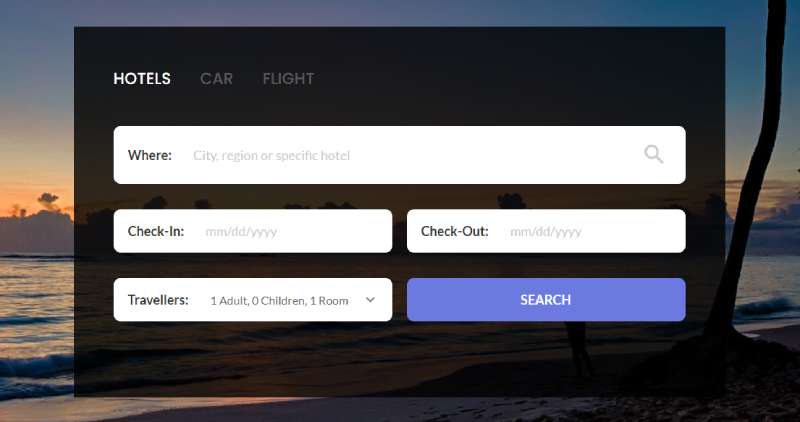
Bootstrap Searchbar by Ace Subido

App Search Bar – Bootstrap Search Bar Examples For Mobile Apps

Bootstrap 4 Algolia Instant Search Location Autocomplete Input

Beautiful Search Box

Bootstrap Responsive Carousel with Three Input Search Form

Search Form V25 -Dark Theme Search Box

Bootstrap 4 Text Input Form with Search Icon

Bootstrap Search Box With Filter
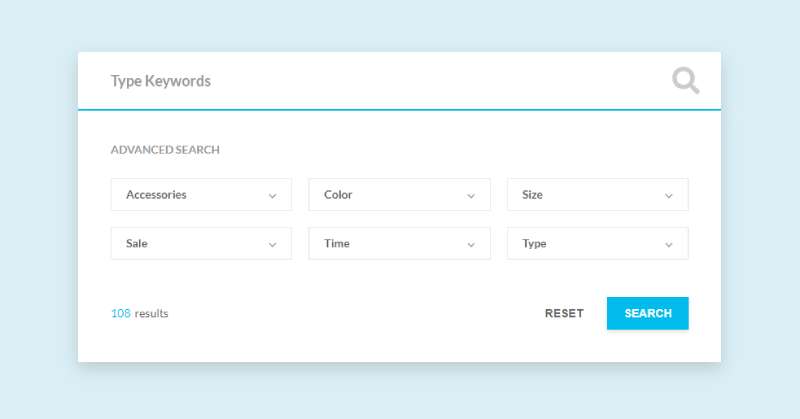
Search Form v1

Bootstrap 4 Simple Responsive Search Box

Bootstrap 5 Task List With Search

Minimal Search Bar

How Does a Bootstrap Search Box Work
The search box relies on Bootstrap’s form component system.
When a user types a query and submits, the browser sends form data to your server or triggers a JavaScript event handler.
Client-side filtering uses event listeners on the input field. Server-side processing requires form submission or Ajax requests.
The input-group class wraps the search field with addons like buttons or icons. The form-control class applies Bootstrap’s default input styling.
Focus states, placeholder text, and validation feedback work out of the box.
Bootstrap Search Box Examples
Basic Bootstrap Search Input
The simplest implementation uses a single Bootstrap input field with type="search".
Add form-control class and wrap in a form element. Works on all screen sizes without extra configuration.
Bootstrap Search Box with Button
Combine input-group with a Bootstrap button for explicit search submission.
Use input-group-append or input-group-text depending on your Bootstrap version. Button variants like btn-primary or btn-outline-secondary control the appearance.
Bootstrap Navbar Search Box
Place your search box inside the Bootstrap navbar component using the d-flex utility class.
The search form collapses with the hamburger menu on mobile devices. Add me-2 or ms-auto for proper spacing in the navigation bar.
Bootstrap Search Box with Icon
Add Bootstrap icons or Font Awesome inside the input group.
Position icons using input-group-text as a prepend or append element. The magnifying glass icon is standard for search fields.
Bootstrap Search Box with Dropdown
Attach a Bootstrap dropdown to let users filter search categories before submitting.
Combine dropdown-toggle with input-group for category selection. Useful for e-commerce sites with multiple product types.
Bootstrap Search Box with Autocomplete
Autocomplete requires JavaScript to fetch and display search suggestions as users type.
Libraries like Typeahead.js or custom implementations listen for keyup events. Display results in a dropdown list positioned below the input field.
Full-Width Bootstrap Search Box
Apply w-100 utility class for full container width. Works well in hero image sections or dedicated search pages.
Combine with grid system columns to control maximum width on larger screens.
Bootstrap Search Box with Clear Button
Add a clearable input feature using the HTML type="search" attribute or custom JavaScript.
Some browsers show a native clear button automatically. Custom implementations use an X icon that resets the input value on click.
How to Style a Bootstrap Search Box
How to Change Bootstrap Search Box Colors
Override default colors using custom CSS or Sass variables like $input-border-color and $input-focus-border-color.
Target the .form-control:focus selector to change the focus ring color. Button colors use standard Bootstrap color classes.
How to Adjust Bootstrap Search Box Size
Use form-control-lg or form-control-sm for predefined sizes.
Custom dimensions require CSS overrides for height, padding, and font-size properties. Match button sizing with btn-lg or btn-sm classes.
How to Add Custom CSS to Bootstrap Search Box
Create a separate stylesheet loaded after Bootstrap’s CSS file.
Target specific classes with higher specificity or use !important sparingly. Custom border-radius, box-shadow, and transition effects personalize the component.
How to Add Search Functionality to Bootstrap Search Box
Basic functionality uses standard form submission to a server endpoint that processes the query and returns results.
For live search results, attach an event listener to the input field:
- Listen for
inputorkeyupevents - Debounce requests to avoid excessive API calls
- Fetch matching data from your server or filter client-side arrays
- Render results in a dropdown container below the search box
JSON data filtering works well for small datasets loaded on page initialization.
Larger datasets need server-side search with database queries. Highlight matching terms in results using string replacement or regex patterns.
Bootstrap Search Box Accessibility
Screen readers need proper labels to announce search fields correctly.
Add aria-label="Search" or associate a visible label using the for attribute. The ARIA role of search on the form element helps assistive technologies identify the component’s purpose.
Keyboard navigation must work without a mouse:
- Tab key moves focus to the input field
- Enter key submits the search form
- Escape key clears autocomplete suggestions
- Arrow keys navigate dropdown results
Maintain sufficient color contrast between input text and background. The WCAG standard requires a minimum 4.5:1 ratio for normal text.
Follow accessible forms guidelines by including error messages that announce to screen readers when search validation fails.
Bootstrap Search Box Responsive Behavior
Bootstrap’s mobile-first design approach means search boxes stack vertically on small screens by default.
Use media queries to adjust sizing at specific breakpoints. The viewport width determines which utility classes apply.
Common responsive patterns:
- Collapsible search – hidden behind toggle icon on mobile
- Full-width input on small screens, fixed width on desktop
- Icon-only button on mobile, text label on larger screens
Test across Chrome DevTools device emulator and real mobile devices. Touch targets need minimum 44×44 pixel dimensions for usability.
Bootstrap Search Box Browser Compatibility
Bootstrap 5 supports all modern browsers including Chrome, Firefox, Safari, and Edge.
The type="search" input renders differently across browsers. Safari shows a native clear button; other browsers may not.
Cross-browser compatibility issues typically involve:
- Custom styling on native search input controls
- Autofill background colors overriding your design
- Focus outline appearance variations
Use vendor prefixes or CSS resets to normalize appearance. The -webkit-search-cancel-button pseudo-element lets you style Safari’s clear button.
Bootstrap Search Box Best Practices
Place the search box where users expect it. Top right corner or center of the Bootstrap header works best for most sites.
Keep placeholder text short and descriptive. “Search products…” beats “Type your search query here”.
Use micro-interactions for feedback:
- Subtle focus animation on input selection
- CSS loaders during search processing
- Highlight matching text in autocomplete results
The user experience improves when search results appear without full page reload.
Display “No results found” messages with helpful suggestions rather than empty containers.
Integrating Bootstrap Search Box with Other Components
Combine search with Bootstrap modal for overlay search experiences. Trigger the modal on search icon click, auto-focus the input field.
Add search to Bootstrap sidebar components for documentation sites or admin dashboards.
Bootstrap tabs can organize search results by category. Filter products, articles, and users into separate tabbed sections.
Display results using Bootstrap cards for visual content or Bootstrap tables for data-heavy applications.
Show loading states with Bootstrap progress bar or skeleton screens while fetching results from the server.
FAQ on Bootstrap Search Box Examples
How do I create a basic search box in Bootstrap?
Add an input element with type="search" and the form-control class. Wrap it in a form tag for submission handling.
The Bootstrap components system applies default styling automatically.
How do I add a search icon to Bootstrap search box?
Use the input-group wrapper with input-group-text containing an SVG icon or Font Awesome class.
Position icons as prepend or append elements inside the input group container.
How do I make Bootstrap search box responsive?
Bootstrap handles basic responsiveness by default. Use utility classes like w-100, w-md-50 to control width at different breakpoints.
Test on multiple screen sizes using browser developer tools.
How do I add autocomplete to Bootstrap search box?
Implement typeahead functionality using JavaScript libraries or custom code. Listen for input events, fetch matching data, then display results in a dropdown list below the field.
How do I style Bootstrap search box with custom CSS?
Create a stylesheet loaded after Bootstrap’s CSS. Target .form-control class to override default styles.
Learn how to override Bootstrap CSS properly using specificity or Sass variables.
How do I add a search box to Bootstrap navbar?
Place a form element with d-flex class inside the navbar collapse section. Add me-2 for spacing.
The search form collapses with other Bootstrap menus on mobile devices.
How do I add a clear button to Bootstrap search box?
The native type="search" shows a clear button in some browsers. For consistent behavior, add a custom X button using JavaScript that resets the input value on click.
How do I make Bootstrap search box accessible?
Add aria-label attribute or associate a visible label. Include role="search" on the form element.
Follow inclusive design principles for keyboard navigation support.
How do I connect Bootstrap search box to backend?
Use standard form submission with action attribute pointing to your server endpoint. For live search, send fetch requests on input events.
Return JSON data and render results dynamically on the frontend.
How do I add dropdown filter to Bootstrap search box?
Combine input-group with a dropdown button using dropdown-toggle class. Users select a category before searching.
Pass the selected filter value along with the search query on form submission.
Conclusion
These Bootstrap search box examples give you a solid starting point for any project. Pick the pattern that fits your needs and customize from there.
The input group system handles most layout requirements. Sass variables let you match your brand colors without fighting the framework.
Focus on web accessibility from the start. Add proper ARIA labels, keyboard support, and sufficient contrast ratios.
Test your search component on real devices. Chrome DevTools helps, but nothing beats actual mobile testing.
Connect your user interface to a fast search index for the best results. Debounce input events to reduce server load.
Start simple. Add complexity only when your users need it.

Many of his resources are available on various design marketplaces. Over the years, he's worked with a range of clients and contributed to design publications like Designmodo, WebDesignerDepot, and Speckyboy, Slider Revolution among others.
- What is Backend in Web Development? - September 13, 2026
- What is Frontend Development? - September 11, 2026
- How to Make a Button in Figma: Design Best Practices - September 10, 2026